

When we start the path of unschooling, it is almost always through our children; for a long time, we think this is for them. The reality is that our children are just the excuse to be able to unschooled ourselves.
Unschooling the adult brain is an idea that comes to mind abstractly. It is an intuition and a feeling that we do not say out loud since we do not know how “correct” that phrase is. This feeling is the first indication that you started your journey to freedom.
Unschooling as a Philosophy of Life
It is typical to feel embarrassed by the idea of taking the reins of family education since part of our schooling starts from being ashamed of being free and feeling special and unique. Just thinking about it would be ridiculous and even selfish if we were to feel it. If you thought this way or are feeling this way, I hug you, and today we will take one more step toward that feeling.
Our children have spent less time in school, and in some cases, they have not been in school, so they are not the ones who have to adapt to their new life. They have to adjust to you, the schooled adult, to adjust to their new life.
This article is written so that you can embrace your adaptation as an adult towards unschooling, give yourself permission to go through your process as long as you need it, and not bring your children into your process.
Once we understand that unschooling is not an educational method, but a family lifestyle, you will see how everything flows at home and have the calm and freedom you were looking for when the idea first entered your brain. It takes time and is uphill after a year or so of trying. It is normal. Furthermore, it is part of the process.
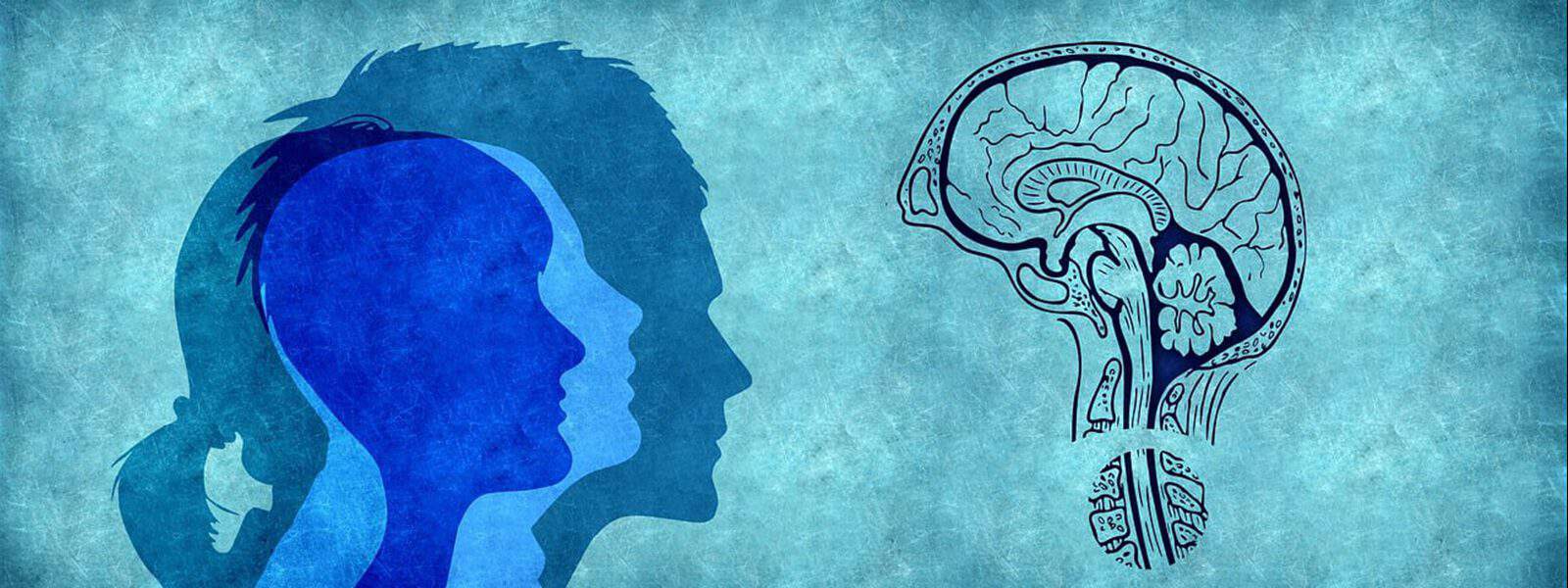
Unschooling the adult brain
The first thing to know is how the brain learns. It does through external incentives, whatever they may be, and it also has such plasticity that it can adapt to any new motivation, which allows us to learn and unlearn with or without awareness of it.
The neurons receive the information, make it travel through the synapse, and if this same stimulus is repeated several times, then memories are forged.
Memories are not always forged by repetition. The brain needs to be excited to learn, and a strong emotional experience, whether pleasant or not, can fix specific learning in our brain just by feeling it once. Both schooling and unschooling provide and are enriched by this same process.
Unschooling stages
It does not matter if we start unschooling in our children’s adolescence or when they are two years old; our unschooling process is usually activated in the same order.
Throughout our school life, they have imbued us with different levels of fears and requirements to meet according to the stage we live in the school. We will transmit these fears to our children without the need to place them out loud but transform them into exacerbated security and protection.
For this first stage, which is ours… as adults, we will continuously scan our fears. Why continuously? Because the vast majority of our worries linked to school are unconscious and only surface when an action activates them; then there will be many, many fears that you will not be able to work on by only sitting in the living room of your house and with a coffee contemplating the horizon; it is more likely you will do it at the moment in which you interact with other people, mainly with your children.
The two levels of guilt and the limits
To start unlearning, learning, and relearning to forge our new lifestyle, we must be aware of our beliefs and how they govern us. To eliminate the guilt that unconsciously seeds fear in us.
To do this continuously, we have to realize that we took our children out of the educational system because several things did not resonate with us, and one of them is how far the system is from the personal reality of its students.
A reality not seen in the educational system is that adults have feelings, emotions and that we are not perfect. In fact, for the traditional educational method, showing our feelings and doubts in front of our children symbolizes weakness. The way to do this exercise is by showing our children that we are exploring this path with as many uncertainties as they are and that sometimes we can feel overwhelmed and do not understand why.
In this exercise, we are going to investigate two levels of guilt through these three questions:
- Do I do it because they are my fears?
- Do I do it because I am repeating patterns?
- Do I do it because I set limits?
It is continuous, and although simple, it can be challenging to apply. With practice, it will come automatically.
Exercise to Unschool the Schooled Adult Brain
There are plenty of opportunities to put the exercise into practice. Whenever we feel the need to scold, punish, force, or guide our children without taking a moment of introspection about whether they need to be taught, it is the right time to start the exercise.
We have been told that we must act immediately; otherwise, the purpose of the correction is not understood. This is half true; if no explanation precedes the action, the child will not see the connection. Today, you will learn how to create that connection. This is all you need to do this exercise organically.
A characteristic example of the perfect moment to start the exercise is the following:
You go to the park, your kid goes up on the opposite side the game was designed for, and he is doing it in a hazardous way.
The first natural reaction of a schooled brain is to yell for him to get off and call him to tell him never to do that again, that it is very dangerous. A list of possible scenarios invites him to reflect so he never does it again. Does it sound familiar to you?
I invite you to do it differently, do not feel bad if you only think about it the first time (or first times) and do what I stated before. It is a process. Be nice to you. What I invite you to do is the following:
You call your child’s attention, maybe by shouting, maybe not. Trust the process, as it comes out instinctively. When he gets to you, explain to him that this makes you very nervous, that you haven’t been able to figure out how it makes you feel, and that if he can do his best not to play like that for today. Later, when you know how it made you feel, you explain it to him.
It is feasible that he will do it again after 15-20 minutes. You simply remind him of what you talked about. Children are very open and compassionate; it’s just that they still place their desires above other things, and their memory fails them in those cases. They don’t do it on purpose; that’s how human beings develop, don’t take it personally.
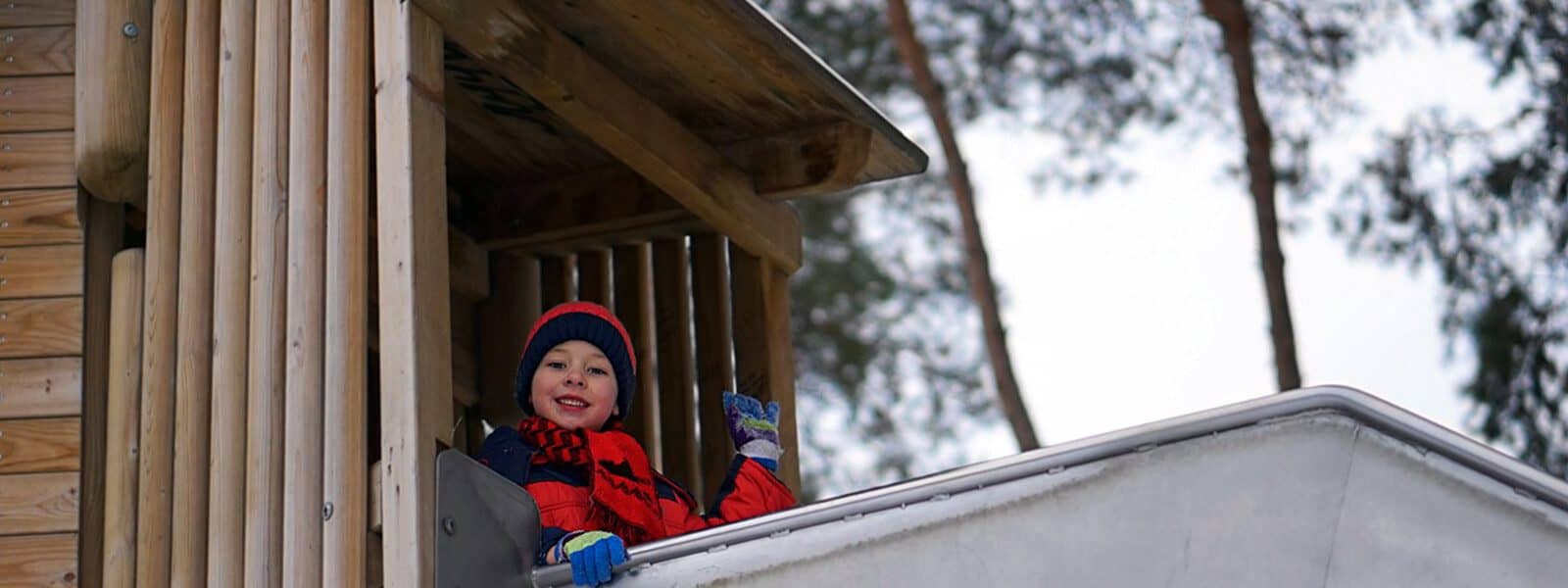
In a reflective moment, that you don’t have to be in their care, either when bathing or before going to bed or waking up, ask yourself why you don’t want your child to use the game like this:
Do I react like this because it is my fear?
Try to visualize how your son maneuvers his body at home and how aware he is of his motor skills.
If at home he never does anything physical and you don’t know how he handles his body, or you have seen him being an enthusiast, but he always ends up falling, then your fear is for his safety and not for transference. You can go to the next question.
Now, if when you visualize your son, you realize that he is the miniature version of spider-man and that he is fully aware of his body and the rest of the objects; then the fear is yours, and you are adding to his backpack beliefs (who already has his fears and will have other worries as he lives) that are not his and that has nothing to do with his capabilities. In this case, you don’t need to continue investigating and talk to your son; tell him what you felt, and the conversation will be different, it will be about safety, about preparing before climbing a new object, and not about an a priori prohibition of an innate ability.
Do I react like this because I repeat patterns?
If you proceed to the second question, try to visualize yourself, your role as a mother/father, and what is expected of your position. Is this your way to protect your child unconditionally and no matter what? We can answer it quickly with these two options: 1) That unconditionally includes his personal decisions. 2) Or, on the contrary, you know you are there to accompany him.
Travel back to your childhood and remember a similar situation, whether as a child, adolescent, or adult, where you wanted to try something new and were forbidden because your parents did not see your ability to solve this new challenge together.
If you found that episode and it struck a chord within you, first allow yourself that moment to internalize the discovery because deschooling the adult brain moves many internal processes that were very comfortable resting in our psyche. Another way to know if you are about to encounter the episode and you are not yet ready to face it is that you will respond in your mind with “because it was always done that way,” “because it should be,” or “because there is no other way to do it.”
If so, you do not need to skip to the next question. Once you are calm with your process, call your son to talk about why he decided to get on like this, if he saw it from someone else, if he wants to try lower and go up, if he felt good doing it, or if when he attempted to it, he realized that it was not his thing or if he wants to try again with supervision to see how it goes. Let your child decide to do or not do an activity anymore.
If you didn’t find that episode, or if you found it and it gave you a lot of strength, and you feel good about that episode, go to the next question.
Do I react like this because I set limits?
If your child has never shown the ability to climb anything and there is no “should be” or “because it was always done that way” in your reaction, it is because you know when to set limits. Now we will work on how to set them.
Call your son and tell him that even if he wants to try new things, he always has to be prepared when he increases the difficulty of things. That he has your 100% support and that you want to be present and warned every time he tries something new, so you can assist him and be present as his security and support team. If it is his passion, he will do it with more and more skill; perhaps at home, he has yet to have the opportunity to try this type of activity. And if he is uninterested, he will leave him and have better self-awareness.
Final Recommendations
Added to this is not pushing our children when we know they have an innate ability. We only sometimes want to eat our favorite dish every day. There are times of exploration that are as rich and vital as having discipline.
You always have to ask about the cause of their decisions and not force them at once or the opposite, to let them resign just by asking. Always call to feel and raise awareness of what drives us.
If it is your passion, he will return to it. If not, it is a tool to face the next activity. It is never wasted time when freedom is respected.
Once you begin to face this exercise with each situation (or almost with each case), there will come a time when you will not stop to ask yourself the questions, and you will directly know what it is about, and you will be able to act at the moment. It takes time: it’s very satisfying and healing once you get it.
Other stages of unschooling have to do with the adult brain. We will publish them. Check out the newsletters if you are part of WRA, or visit us regularly to discover new content if you are not enrolled yet. Remember to clear doubts before signing up with a free 15-minute call.
